Hakuba Snowboarding Guide: Ten Resorts, Olympic Slopes and Alps Powder
Ten ski areas in the Japanese Northern Alps share one valley pass. Here is how to reach Hakuba from Tokyo, how the resorts differ, 2026–27 lift prices and a realistic budget.
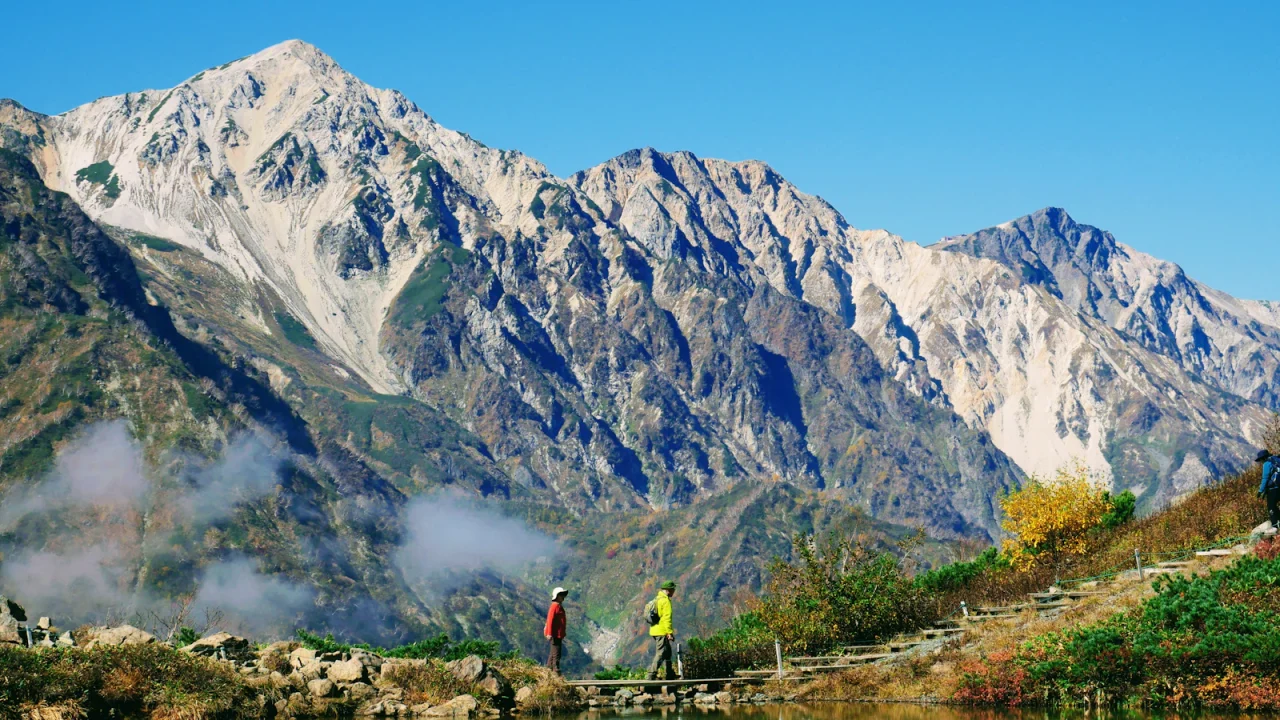
Hakuba is where Japanese powder meets serious mountain scenery. The valley sits in the Northern Alps of Nagano Prefecture, ringed by peaks in the 3,000-meter class, and it hosted several events at the 1998 Winter Olympics. Today it is one of the most popular snow destinations in Japan, with ten separate ski areas and a valley-wide ticket that lets you sample several in a single trip.
The appeal for snowboarders is variety. Some areas have wide beginner slopes and long cruising runs, others have tree zones and terrain parks, and a few quieter resorts suit families. This guide explains how to reach Hakuba from Tokyo, how the resorts differ, what the 2026–27 lift tickets cost, and how to build a budget that adds up.
Location and getting there
Hakuba is in the northwest of Nagano Prefecture. Most international visitors arrive at Tokyo’s Narita (NRT) or Haneda (HND) airport, then head west by rail and road. Hakuba Valley’s official site lists the shortest Tokyo-to-Hakuba journey, by Shinkansen plus express bus, at about 2 hours 50 minutes. With airport transfers and waiting time, plan on roughly 3 to 5 hours from either Tokyo airport.
| Route | Approx. time | Approx. cost (JPY) |
|---|---|---|
| Hokuriku Shinkansen from Tokyo Station to Nagano, then express bus to Hakuba | About 90–100 min train plus about 60–90 min bus | About ¥8,000 train plus ¥3,500–¥3,800 bus in winter |
| JR Azusa limited express from Shinjuku to Matsumoto, then JR Oito Line | About 4–4.5 hours | About ¥8,270 |
| Highway bus from Shinjuku or Tokyo Station | About 5 hours | Roughly ¥5,000–¥10,000 |
Times and prices are approximate and come from go NAGANO and japan-guide.com, checked in November 2026. The express bus from Nagano Station runs frequently to the Happo Bus Terminal and other stops, and go NAGANO notes extra winter buses from Tokyo and major airports, including Narita and Haneda, via the Nagano Snow Shuttle. The official Hakuba Valley access page also lists car and rail routes from other airports, such as Chubu, Kansai, Niigata, Toyama and Komatsu, with details mostly in map images and Japanese text.
Within the valley, the Hakuba Valley Shuttle Bus links the resorts. It is free on days you ski or snowboard with a valley day pass, but it does not cover night riding or the night shuttle.
Terrain and riding
The Japan National Tourism Organization describes the valley as having ten resorts, 106 lifts and more than 200 runs. Hakuba Valley’s own site highlights gentle slopes for beginners, long cruising runs of about 8,000 meters in total for stronger riders, and powder fed by the surrounding 3,000-meter peaks. Otari and Hakuba are known for powder, according to go NAGANO.
- Happo-one: the largest and best-known area, closest to Hakuba Station and the village center, per japan-guide.com. It hosted alpine events at the 1998 Olympics. Published vertical figures cluster around 1,070 meters, though sources vary. It has a terrain park, but no night riding.
- Hakuba Goryu and Hakuba47: two mountains linked by lifts and slopes on one shared ticket. Hakuba47 lists a terrain park and a Tree Riding Zone where you need an armband, and Goryu offers night riding.
- Tsugaike Kogen: the second-largest area, with 14 lifts, just outside the village. It has no night riding in 2026–27.
- Hakuba Cortina and Hakuba Norikura Onsen: partner resorts further from central Hakuba, with Norikura beside Tsugaike.
- Iwatake: close to central Hakuba and lower in elevation than its neighbors.
- Jigatake, Kashimayari Family Park and Sanosaka: smaller areas that complete the valley’s ten.
Beginners: good. Several areas have gentle runs, and many schools teach in English. Intermediates: excellent, thanks to long groomed runs across multiple mountains. Advanced riders: good, especially for powder days, trees and freeride-style terrain.
The same Alpine geography that delivers the powder also creates avalanche terrain outside resort boundaries. Stay in bounds unless you have training, equipment and a guide, and follow the resorts’ own rules for tree zones and closed areas. Our snowboard safety tips cover the basics.
When to go
go NAGANO puts the main winter season from mid-December to late March, with January and February as the peak and March a quieter spring-skiing period. Opening and closing dates vary by resort. japan-guide.com lists the following 2026–27 dates (updated October 18, 2026, subject to snow conditions):
| Resort | Listed 2026–27 dates |
|---|---|
| Happo-one | Dec 1, 2026 – May 5, 2027 |
| Hakuba Goryu | From Nov 21, 2026 (limited area at first, using machine-made snow); typically to early May |
| Hakuba47 | Late November to early May |
| Tsugaike Kogen | Dec 1, 2026 – May 5, 2027 |
| Hakuba Norikura Onsen | Dec 12, 2026 – Apr 4, 2027 |
| Hakuba Cortina | Dec 12, 2026 – Mar 29, 2027 |
| Hakuba Iwatake | Dec 18, 2026 – Mar 28, 2027 |
Happo-one’s own site also says winter operations are planned to begin December 1. If you want the full valley open, midwinter is the safest window; early and late in the season, some areas may be limited or closed.
Where to stay
The Japan National Tourism Organization names Happo and Echoland as the main places to stay. Happo is the base closest to Happo-one, while Echoland is a hub for restaurants, bars and nightlife, with shuttle buses connecting it to the resorts. Smaller clusters of pensions and lodges sit near Goryu and Hakuba47 (around Kamishiro Station) and in the Wadano area below Happo-one.
Accommodation runs from hostels and family-run pensions to hotels and chalets. One cost guide notes that pensions and small lodges usually cost well below comparable rooms in Niseko. Decide on your base by priorities: Happo for convenience, Echoland for dining and nightlife, Goryu and 47 for freestyle and tree riding. Check shuttle times for any base that is not walkable to a lift.
Food, après and facilities
Echoland is the main dining and evening hub, with restaurants, bars and nightlife. Omachi has an onsen area with a dozen or more hotels and ryokans, and the town has hot springs generally, according to japan-guide.com and go NAGANO. JNTO notes English-speaking ski lessons and English daycare in Happo.
Night riding is limited. japan-guide.com lists a night ticket at Goryu (¥6,000) and Cortina (¥3,500), while Tsugaike has none in 2026–27 and the valley day pass does not cover night riding at all.
Lift passes
The Hakuba Valley All-Mountain Day Pass is valid at all ten resorts and can be used at several in the same day. The official 2026–27 prices, in Japanese yen and tax included, are:
| Pass | Adult (13+) | Child (6–12) | Validity window |
|---|---|---|---|
| 1-day | ¥11,100 | ¥6,400 | Day of use only |
| 3-day | ¥32,200 | ¥18,100 | 6 days from first use |
| 5-day | ¥53,400 | ¥29,700 | 10 days from first use |
| 10-day | ¥106,100 | ¥58,800 | 16 days from first use |
Children under 6 ride free. Passes are sold online, and the validity window starts at your first lift or shuttle bus ride, so even a shuttle-only day counts as a day used. Unused days cannot be refunded or carried over. Night riding and the night shuttle are not valid on the pass.
If you only plan to ride one area, single-resort full-day tickets listed by japan-guide.com for 2026–27 include roughly ¥9,800 at Happo-one and Tsugaike, ¥9,500 at Goryu and Hakuba47, ¥7,500 at Iwatake and ¥6,500 at Norikura and Cortina. Prices vary by date and purchase method.
Epic Pass: Hakuba Valley’s site and Epic’s own site list one complimentary 5-consecutive-day ticket for eligible pass holders, valid at all ten resorts with no blackout dates. The pages disagree on exactly which Epic products qualify, and Epic Day Passes and Military passes are excluded, so confirm your pass type before you travel. The benefit does not cover night riding. Hakuba Valley also sells an All-Mountain Season Pass, but the official page quotes prices for Japan residents, so most visitors will use day passes.
Equipment rental
Rental shops operate across the valley; Spicy, for example, lists locations in Echoland, Wadano, Happo, Iwatake and Tsugaike. Its 2026–27 regular rates are ¥9,000 per day for an adult snowboard-and-boots package in the standard range, ¥11,000 for a higher-performance range and ¥5,000 for kids under 13, and it publishes separate online rates. If you are comparing, see rent or bring your own snowboard.
Lessons are widely available in English. The Hakuba Valley site lists authorized ski schools at each resort, including Hakuba Happo-one Ski & Snowboard School and Evergreen International Ski School at Happo-one, the Hakuba47 Snowboard School and Japan Park School at Hakuba47, and the Hakuba Snow Sports School at Goryu. The site recommends authorized schools because of resort regulations.
What to pack
Hakuba’s cold, snowy conditions call for waterproof layers, warm mid-layers and goggles that handle both flat light and bright days. A helmet is a good idea whether you ride the park or the trees. Waterproof gloves and a spare pair are worth the space in your bag, and a backpack helps on powder days if you carry water and layers.
Trains and buses are the usual way in, so a padded bag with wheels is easier to manage than a board slung over your shoulder. Check each operator’s baggage rules for long items before you travel.
View on Amazon (opens Amazon search for snowboard goggles with interchangeable lenses in a new tab)
See Available Options (opens Amazon search for padded snowboard travel bag with wheels in a new tab)
Our flying with a snowboard guide covers the rest.
Approximate trip budget
These are editorial planning estimates in Japanese yen, checked November 2026, based on official 2026–27 lift prices, one rental shop’s rates and third-party cost guides. They exclude flights. For a quick conversion, one cost guide assumed about ¥157 per US dollar, so ¥11,100 is roughly US$71. Check live exchange rates.
| Item | Approx. range (JPY) | Basis |
|---|---|---|
| Lift ticket, adult 1-day (valley pass) | ¥11,100 | Official Hakuba Valley 2026–27 price |
| Lift ticket, single resort 1-day | ¥6,500 – ¥9,800 | japan-guide.com 2026–27 listing |
| Snowboard and boots rental per day | ¥9,000 (standard); ¥11,000 (higher-performance) | One shop’s regular rate; online rates may be lower |
| Food per day | ¥4,000 – ¥8,000 | Third-party guide: convenience store and ramen up to casual restaurants |
| Lodging per night | About ¥9,000 for a hostel or pension (one guide’s assumption) | Planning assumption, not a surveyed rate |
| Tokyo to Hakuba, one way | About ¥11,500 – ¥11,800 | Shinkansen plus winter express bus |
Example, excluding flights and lodging: a 5-day valley pass (¥53,400), five days of standard rental (¥45,000), food at ¥4,000 to ¥8,000 per day and round-trip Tokyo transfers come to roughly ¥141,000 to ¥162,000 per person. Lessons, night riding and nicer lodging will add to that total. See our snowboard holiday cost guide or run your own numbers.
Pros and cons
Pros
- Ten resorts on one valley day pass, with a free shuttle on ski days
- Powder-friendly Alps location with Olympic history
- Variety: beginner slopes, parks, trees and long cruising runs
- Epic Pass holders get 5 days across all ten resorts
- Reachable from Tokyo in roughly 3 hours by train and bus
Cons
- Resorts are spread out, so you need to plan your base and shuttles
- Night riding is limited and not covered by the valley pass
- Resort opening dates vary and early or late season can be patchy
- Lift and run counts differ between sources, so check official trail maps
- Backcountry terrain is serious and needs training and a guide
Frequently asked questions
How do I get from Tokyo to Hakuba?
The usual route is the Hokuriku Shinkansen from Tokyo Station to Nagano (about 90–100 minutes), then an express bus from Nagano Station to Hakuba (about 60–90 minutes). Hakuba Valley lists the shortest total as about 2 hours 50 minutes.
How much is a Hakuba Valley lift ticket for 2026–27?
The official all-mountain 1-day pass is ¥11,100 for adults and ¥6,400 for children aged 6 to 12, with discounts on multi-day passes. Night riding is not included.
Does the Epic Pass work in Hakuba?
Eligible Epic passes include one 5-consecutive-day ticket valid across all ten resorts, without blackout dates, though the pages disagree on which products qualify. Confirm yours with Epic or Hakuba Valley.
Which Hakuba resort is best for beginners?
Several resorts have gentle terrain, and Happo is a convenient base with English-speaking lessons. Ask your chosen school which area suits your level.
Is there night snowboarding in Hakuba?
Yes, but only at a few areas. japan-guide.com lists night tickets at Goryu and Cortina, and Tsugaike has none in 2026–27. The valley pass does not cover night riding.
Related resort guides
- Niseko snowboarding guide: four linked resorts on Hokkaido.
- Whistler Blackcomb snowboarding guide: a huge two-mountain resort in British Columbia.
For the bigger picture, see snowboarding in Japan and Japan versus Canada.
Sources and further reading
- Hakuba Valley official site — Hakuba Valley Tourism
- Day pass prices 2026–27 — Hakuba Valley
- All-Mountain Season Pass — Hakuba Valley
- Epic Pass at Hakuba Valley — Hakuba Valley
- Ski schools — Hakuba Valley
- Access — Hakuba Valley
- Hakuba Valley Epic Pass access — Epic Pass
- Hakuba ski area guide — japan-guide.com
- The Hakuba Valley guide — go NAGANO
- Hakuba — Japan National Tourism Organization
- Hakuba Happo-one Snow Resort — Happo-one
- Happo-One Resort — Hakuba.com
- Hakuba47 and Hakuba Goryu — Hakuba47 Mountain Resort
- Ski and snowboard rental rates 2026–27 — Spicy
- Japan ski trip cost — Trip to Japan