Snowboarding in Switzerland: Best Areas, Season, Travel and Costs
From Laax's big halfpipe to Verbier's freeride routes and Zermatt's glacier, here is how to choose a Swiss area, time your trip and plan the journey.
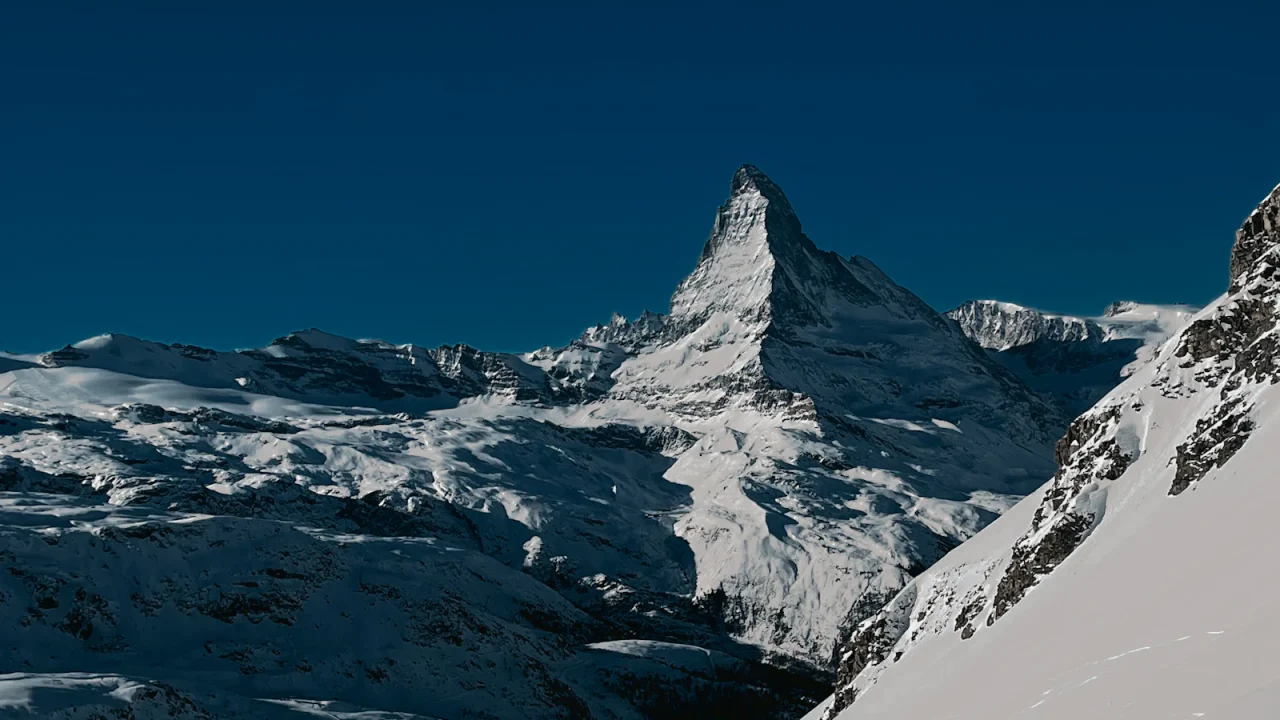
Switzerland packs a lot of variety into a small country. Within a few hours of each other you can find a freestyle mecca with one of the biggest halfpipes in Europe, a freeride playground with marked, ungroomed routes, and a glacier area that runs for much of the year beneath the Matterhorn. Getting between them is easy: Swiss rail and bus networks reach most resorts, and the major airports are well connected.
This guide gives you the overview: the best-known areas for snowboarders, when the season typically runs (with 2026–27 scheduled dates), how to get around, a few published ticket prices in Swiss francs, and tips for riding here. As always, check the official sources before you book, because Swiss lift tickets use dynamic pricing and dates can shift with snow.
Why snowboard in Switzerland
The main reason is range. Freestyle riders have one of the largest park operations in the Alps in Laax, freeriders have Verbier’s marked ungroomed routes and the high lifts of the 4 Vallées, and anyone who wants altitude has Zermatt, where the Matterhorn Glacier Paradise reports skiing and snowboarding 365 days a year. Davos is known for its Jakobshorn freestyle mountain, and Engelberg-Titlis is a freeride name with a rotating cable car up to the glacier.
The second reason is logistics. Swiss public transport can get you from the airport to the lift base without a car. SBB, the national railway, also runs luggage services that accept snowboards packed in a bag, up to 23 kg per item, and has offered rail-plus-lift-ticket bundles for many resorts. If you want to compare Switzerland to its neighbors, our best snowboarding destinations in the world roundup is a good starting point, and the resort comparison tool lets you put resorts side by side.
Main areas and best-known resorts
Laax: the freestyle destination
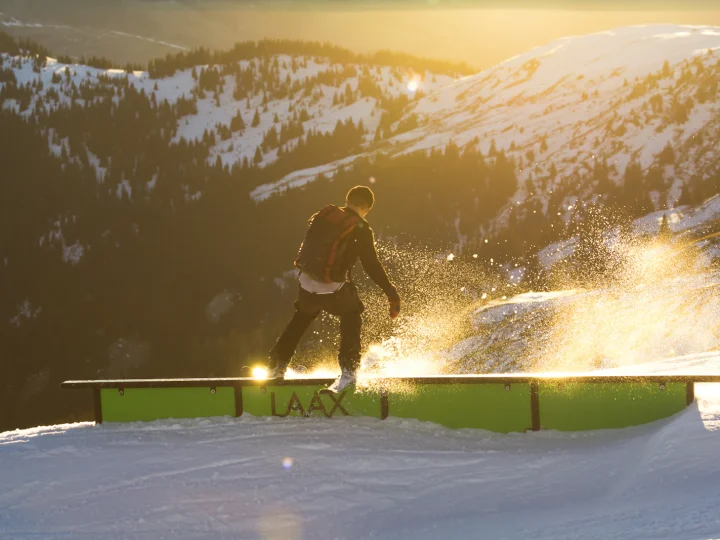
Laax’s official site lists five snowparks with more than 90 obstacles: a Beginner Snowpark, Whoop De Doo, Ils Plauns, P60 and NoName. P60 has a Pro Kicker Line with four Olympic-sized kickers that hosts the LAAX OPEN each year, and NoName is home to the halfpipe the resort calls “The Beast,” listed as 220 m long, 22 m wide and 7 m high and described as the largest superpipe in Europe. See our Laax snowboarding guide for terrain, lodging and passes.
Verbier and the 4 Vallées: freeride country
The 4 Vallées is billed as the largest ski area entirely in Switzerland, with about 410 km of runs and freeride routes in winter by the resort’s own count. Note that independent measurements of marked pistes in the area come out lower, so treat that figure as a marketing total. Verbier’s site lists seven marked, ungroomed freeride routes, including Mont-Gelé, Col des Mines, Vallon d’Arbi and Mur de Chassoure, and Mont-Fort reaches 3,330 m. Our Verbier snowboarding guide goes deeper.
Zermatt and Matterhorn Ski Paradise
The Matterhorn Ski Paradise spans Switzerland and Italy with about 360 km of pistes and 52 lifts, peaking at nearly 4,000 m, which the operator calls the highest ski area in the Alps. In the Zermatt-Cervinia combination, Zermatt sells a Zermatt-only pass and an “International” pass that includes the Italian side. Summer skiing on the Theodul Glacier offers up to 21 km of runs at about 3,883 m. Read how the Italian side works in our Snowboarding in Italy guide.
Davos and Engelberg-Titlis
MySwitzerland highlights Davos for its freestyle-focused Jakobshorn and large halfpipe, and Engelberg-Titlis for varied on- and off-piste terrain, with slopes up to 3,200 m on the Titlis glacier.
When to go
Most Swiss resorts typically run from late November or early December into April, while high-altitude and glacier areas stretch the calendar. Examples for 2026–27: Zermatt’s winter pass is valid from November 1, 2026 to May 3, 2027, and Laax is scheduled to run from November 28, 2026 to April 11, 2027. Early and late season dates usually mean fewer lifts and trails open, so check the resort’s live conditions.
Christmas, New Year and school-holiday periods are typically the busiest. Because Swiss tickets use dynamic pricing, the cheapest days are often outside those weeks, as the Zermatt pricing below shows.
Getting there and getting around
Airports. Zurich and Geneva are the main international gateways. Verbier is usually reached from Geneva by train to Le Châble and then a gondola up to the resort, while Laax is usually reached from Zurich by train to Chur and a bus onward; the resort also lists an airport shuttle. Journey times vary, so check the SBB timetable and the resort’s access page.
Rail and luggage. Switzerland’s integrated network makes car-free trips practical. SBB offers luggage services for flights, and its pages list snowboards packed in a ski or snowboard bag among the accepted items, with a 23 kg limit per item; availability, routes and fees vary. SBB’s leisure offers (such as the Snow’n’Rail bundles) have combined rail and lift tickets for many resorts, so look at sbb.ch before buying separately.
Costs overview
Day tickets in Switzerland increasingly use dynamic pricing, so the price depends on the date and how early you book. The most useful published figures for 2026–27 come from Zermatt:
| Item | Published figure (CHF) | Source and date |
|---|---|---|
| Zermatt 1-day adult pass | From CHF 89 | Matterhorn Ski Paradise, winter 2026/27 |
| Zermatt-Cervinia “International” 1-day adult pass | From CHF 104 | Matterhorn Ski Paradise, winter 2026/27 |
| Zermatt half-day pass (from 12:15) | From CHF 68 | Matterhorn Ski Paradise, winter 2026/27 |
| Laax adult day ticket | CHF 60 shown under 2025/26 prices; dynamic pricing applies | laax.com ticket page |
Zermatt’s page says the lowest prices apply only on certain dates, namely November 1–27, 2026 and April 19–May 2, 2027. Laax’s official ticket page lists its day passes as dynamically priced and shows the live price at checkout, so treat the 2025/26 figure as indicative only. Swiss prices are generally regarded as high, so build in transport, lodging and food as well. The snowboard holiday cost guide and the budget calculator below can help.
Tips for snowboarders
- Buy early for dynamic pricing. Prices are quoted as “from” rates, and the best deals tend to be on quieter dates and when booking online ahead of time.
- Pick the area for your riding style. Freestyle riders look at Laax, freeriders at Verbier, high-altitude seekers at Zermatt.
- Check the Zermatt pass version. There is a Zermatt-only pass and an International one that includes Cervinia, so choose based on whether you plan to ride into Italy.
- Take off-piste seriously. Marked freeride routes are still ungroomed. Check the avalanche bulletin, ride with partners and consider a guide. Our snowboard safety tips cover the basics.
- Use the rail network. Avoiding a rental car can simplify your trip and take winter driving off your plate.
- Pack for altitude. High terrain means strong sun and glare; see our goggles buying guide.
See Available Options (opens Amazon search for padded snowboard travel bag with wheels in a new tab)
View on Amazon (opens Amazon search for snowboard goggles with interchangeable lenses in a new tab)
Pros and cons of snowboarding in Switzerland
Pros
- World-class freestyle facilities at Laax
- Marked freeride routes and high lifts at Verbier
- High-altitude and glacier skiing at Zermatt
- Excellent rail and bus links from major airports
- Compact country, so you can combine areas
Cons
- Costs are high compared with many destinations
- Dynamic pricing makes budgeting harder
- Transfers from airport to resort can still take hours
- Peak weeks are busy
- Published area sizes vary by source, so check the official piste map
Frequently asked questions
Which Swiss resort is best for snowboarders?
Laax is the standout for freestyle, with five snowparks and a large halfpipe. Verbier suits freeriders, and Zermatt suits those who want altitude and a long season.
When is the Swiss snowboard season?
Typically late November or early December to April. For 2026–27, Zermatt’s winter pass runs November 1, 2026 to May 3, 2027 and Laax runs November 28, 2026 to April 11, 2027.
Which airport should I fly into?
Zurich and Geneva are the main gateways. Geneva is usually used for Verbier and Zurich for Laax, with onward travel by train and bus.
Is Switzerland expensive for snowboarding?
It is generally regarded as a high-cost destination. Zermatt’s day pass starts from CHF 89 for 2026/27, and prices vary by date. Use our cost guide to plan.
Can I take a snowboard on Swiss trains?
SBB’s luggage services list snowboards packed in a bag among the accepted items (weight limits apply), and Swiss trains are the usual way to reach many resorts. For carrying a bag yourself, check SBB’s current rules for sports equipment, and see the details for your route and date on sbb.ch.
Is there summer snowboarding in Switzerland?
Zermatt’s Matterhorn Glacier Paradise runs summer skiing on the Theodul Glacier, with up to 21 km of runs at about 3,883 m. The 2026 summer-pass validity was listed as October 14 to November 4, 2026.
Keep planning
Sources and further reading
- Freestyle: snowparks and halfpipe — LAAX
- Tickets — LAAX
- Ski resort — Verbier 4 Vallées
- Ski passes — Matterhorn Glacier Paradise (Zermatt Bergbahnen)
- Summer skiing — Matterhorn Glacier Paradise (Zermatt Bergbahnen)
- Skiing at the Matterhorn Ski Paradise — Matterhorn Glacier Paradise (Zermatt Bergbahnen)
- Snowparks — Switzerland Tourism (MySwitzerland)
- Luggage services — SBB
- Leisure offers FAQ — SBB
- Getting there — Flims Laax Falera