Best Powder Snowboarding Destinations: Japan, BC, Utah and Beyond
Compare the best-known powder destinations in Japan, British Columbia, Utah and Wyoming, with each snowfall figure attributed to its source and avalanche safety essentials.
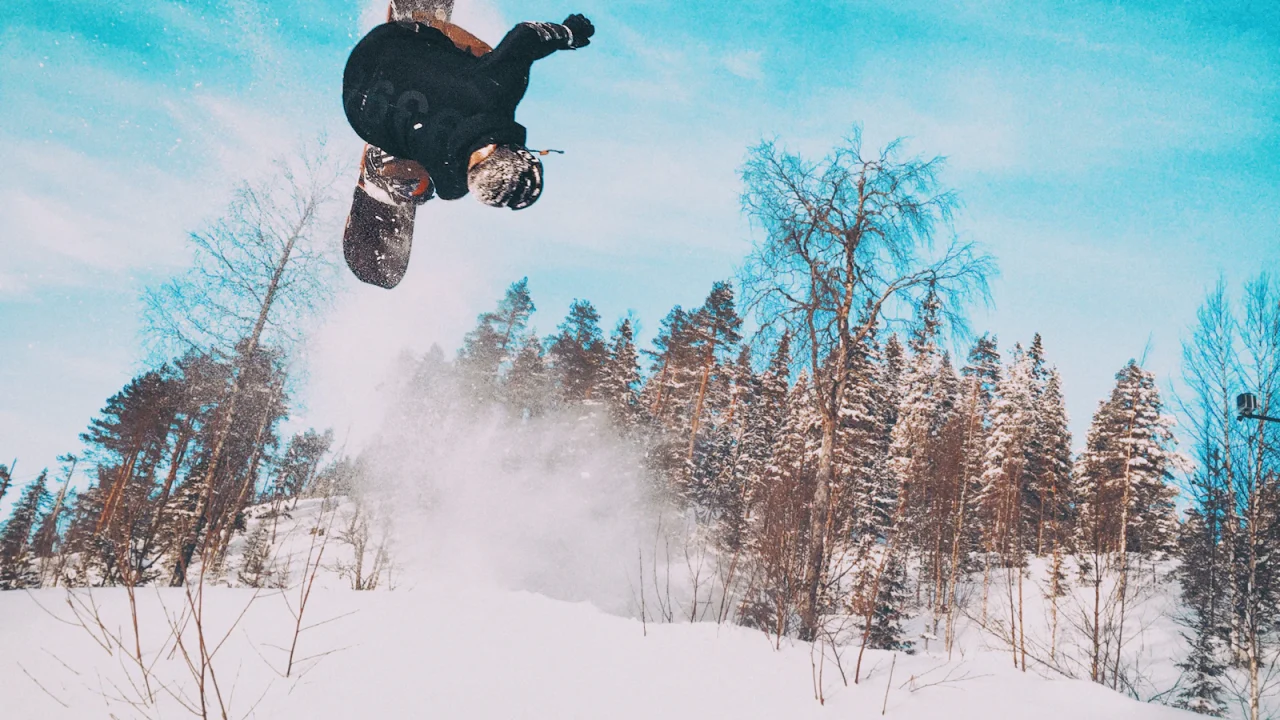
Powder is the reason many snowboarders start planning a trip in the first place. Floating through deep, untracked snow feels different from carving a groomed run, and a few destinations have built their reputations on it.
This guide looks at the places riders most often put at the top of a powder list: Hokkaido and Nagano in Japan, Interior British Columbia, Utah, and Jackson Hole in Wyoming. We lean on figures the resorts and tourism boards publish themselves, and we say who is making each claim, because snowfall numbers are easy to misread. We also cover avalanche awareness, which matters on every deep-snow trip.
How to read snowfall numbers
Resorts love to quote an annual snowfall total, and those totals are not directly comparable. Some are measured at mid-mountain, some at the summit, and some do not say. Periods differ, and published averages may blend very different winters.
Niseko United’s own data shows how much a single resort can vary. Its site lists mid-mountain totals for seven winters: the six from 2013/14 to 2018/19 ranged from 1,105 to 1,665 cm, while 2019/20 came in at 1,070 cm, which Niseko United calls the lowest in recent history. A “big snow resort” can have a quiet season, so treat averages as a guide to the climate, not a forecast.
Snowfall figures at a glance
The table lists figures as the resort or tourism body publishes them, with the caveats each page gives. Where a page did not state a period or measurement point, we note it.
| Destination | Region | Published snowfall | Source and caveat |
|---|---|---|---|
| Niseko United | Hokkaido, Japan | 1,105 to 1,665 cm per winter (2013/14 to 2018/19 range) | Niseko United; measured mid-mountain; 1,070 cm in 2019/20 |
| Hakuba Valley | Nagano, Japan | No annual total found | Hakuba Valley site says the valley has abundant snowfall and high-quality powder |
| Revelstoke Mountain Resort | Interior BC, Canada | 10.5 meters average | Resort stats page; period not stated |
| Whistler Blackcomb | Coast Mountains, BC | 1,072 cm (422 inches) average | Resort mountain info; period and method not stated |
| Snowbird | Utah, USA | 500 inches average | Resort website; period and method not stated |
| Jackson Hole Mountain Resort | Wyoming, USA | 458 inches average | Resort mountain stats |
Ski Utah, the state’s industry body, also advertises more than 500 inches of annual snowfall across its resorts. That is a marketing statement for the state as a whole, not a measured figure for any one mountain.
Japan: Hokkaido and Nagano
Japan has a global powder reputation. The Japan National Tourism Organization calls Niseko a powder snow paradise, and the Hokkaido tourism site describes Niseko as a hub of resorts blanketed in the country’s world-famous powder.
Niseko United, Hokkaido
Niseko United links four resorts: Annupuri, Niseko Village, Grand Hirafu and Hanazono. The official site lists an All Mountain Season Pass, and shows Ikon Pass and Mountain Collective options. New Chitose Airport is the access point for Niseko, with direct bus services. Niseko United also publishes information about its backcountry gate system, a reminder that off-piste access comes with rules (see the safety section below). Our Niseko snowboarding guide has the full picture.
Hakuba Valley, Nagano
Hakuba Valley groups ten resorts under a shared lift pass, including Happo-One, Hakuba 47, Goryu, Iwatake, Tsugaike and Cortina. Nagano Tourism gives a winter window of mid-December to late March, with the peak in January and February. From Tokyo, the Hokuriku Shinkansen to Nagano takes about 90 minutes, followed by an express bus of about 70 minutes. See our Hakuba guide and the broader Snowboarding in Japan overview.
Interior British Columbia and the Coast Mountains
British Columbia’s Interior is famous with riders who want long descents in deep snow. Revelstoke Mountain Resort reports a vertical descent of 1,713 meters, about 3,121 acres across 75 runs, and a terrain split of 12% green, 43% intermediate and 45% advanced. The resort’s site lists December 5, 2026 as opening day and shows Ikon Pass information. Its stats page puts the average snowfall at 10.5 meters. Our Revelstoke guide covers lifts and logistics.
On the coast, Whistler Blackcomb reports 8,171 acres, more than 200 marked runs, 36 lifts and an average snowfall of 1,072 cm. The two mountains are a large, well-organized place to chase storms, and the resort publishes designated backcountry access routes and rules (more below). See the Whistler Blackcomb guide and our Canada overview.
Utah
Utah markets itself as “The Greatest Snow on Earth,” and Ski Utah says ten of its 15 resorts are within an hour of Salt Lake City International Airport. That makes it easy to ride powder without a long transfer. For 2026–27, Ski Utah lists Snowbird opening on November 27, and Park City Mountain on November 20.
Snowbird reports 500 inches of average annual snowfall, 2,500 skiable acres and 2,900 vertical feet. Its site presents skiing and snowboarding together and describes steep chutes, powder bowls and wide-open groomers across Peruvian Gulch, Gad Valley and Mineral Basin, with the Aerial Tram to Hidden Peak. One important note for snowboarders: nearby Alta, often mentioned in the same breath as Snowbird, is ski-only. A 2016 U.S. appeals court ruling described its snowboard ban as a private business decision, and that policy has been reported as continuing since. For a deeper look at the region, see our Park City guide and the USA overview.
Jackson Hole, Wyoming
Jackson Hole leans toward experienced riders, and the resort’s numbers reflect that: it reports a 4,139-foot vertical drop and a terrain split of 50% expert, 40% intermediate and 10% beginner. The resort also reports an average of 458 inches of snow and more than 3,000 acres of backcountry accessible through its open gate system. Jackson Hole Airport is about 11 miles from Teton Village. This is a mountain for confident riders. Our Jackson Hole guide goes into more detail.
Powder safety and avalanche awareness
Several sources we used say the same core things:
- Know where the boundary is. Whistler Blackcomb states that terrain beyond its boundary is neither controlled nor patrolled, and that backcountry travel requires specialized equipment, training and experience. It also lists avalanche closures as areas where skiing and snowboarding are strictly prohibited.
- Carry and know how to use the gear. For its backcountry access routes, Whistler Blackcomb lists an avalanche transceiver (and knowing how to use it), a probe, a shovel and a phone. Its page says every group member needs a transceiver.
- Check the forecast. Whistler Blackcomb points riders to the Avalanche Canada forecast for the Sea to Sky region. Avalanche Canada’s site covers beacons, probes and shovels, Avalanche Skills Training courses, forecasts and guidance for riding outside ski area boundaries. In the United States, avalanche.org, a partnership of the American Avalanche Association and the U.S. Forest Service National Avalanche Center, provides a National Danger Map and points to courses.
- Take training or hire a guide. Whistler Blackcomb recommends an avalanche course or a certified ACMG guide.
- Respect local access rules. Niseko United publishes a backcountry gate system and avalanche information for riders, and Whistler Blackcomb requires a Backcountry Access Agreement.
- Watch for tree wells. Whistler Blackcomb explains that falling head first into a tree well can leave a person immobilized, and advises riding with a partner, keeping them in sight and carrying a whistle. It points to deepsnowsafety.org for more.
The same resort also warns that snowboard boot and binding systems increase the risk of not surviving an avalanche. Read more general guidance in our snowboard safety tips.
Preparing to ride powder
Deep snow rewards good technique and the right setup. Our guide on how to snowboard in powder covers stance, speed and what to do when you get stuck. Powder days also tend to come with falling snow, so goggles that cope with low light are worth packing. Our snowboard goggles guide compares options.
See Available Options (opens Amazon search for snowboard goggles for low light in a new tab)Planning a trip? Our trip planner helps you compare dates and destinations.
Frequently asked questions
Which country has the best powder for snowboarding?
Japan, Canada and the United States are the usual shortlist, and which is best depends on the winter. Japan has the strongest reputation, but resorts quote snowfall differently, so numbers should not be compared directly.
When is the best time to ride powder in Japan?
Nagano Tourism describes a mid-December to late March window for Hakuba Valley, with the peak in January and February. Conditions vary by year and resort.
Can snowboarders ride Alta?
No. Alta has been described in news reports and a 2016 federal appeals court ruling as ski-only. Snowbird and many other Utah resorts do welcome snowboarders, but confirm each resort’s current policy.
Do I need avalanche gear to ride powder at a resort?
Inside the patrolled boundary, obey closures and signs: Whistler Blackcomb still lists avalanches among the hazards of skiing and riding at the resort. If you go beyond the boundary, the guidance from Whistler Blackcomb and the avalanche centers above is to carry a transceiver, probe and shovel, have training, and check the forecast first.
Is powder good for beginners?
Many resorts that get deep snow also have excellent learning areas, but powder days usually suit riders who can already link turns confidently. See our beginner’s guide to build skills first.
Sources and further reading
- How much snow fell in Niseko, 2019–20 winter — Niseko United
- Niseko United official site — Niseko United
- Niseko gate and avalanche information — Niseko United
- Ski resorts in Hokkaido, Nagano and Niigata — Japan National Tourism Organization
- Hokkaido Official Travel Guide — Hokkaido Tourism Organization
- The Hakuba Valley guide — Nagano Tourism
- Hakuba Valley official site — Hakuba Valley Tourism
- Revelstoke mountain stats — Revelstoke Mountain Resort
- Revelstoke Mountain Resort — Revelstoke Mountain Resort
- Mountain info — Whistler Blackcomb
- Backcountry — Whistler Blackcomb
- Safety and risk awareness — Whistler Blackcomb
- Avalanche Canada — Avalanche Canada
- avalanche.org — American Avalanche Association and U.S. Forest Service National Avalanche Center
- Ski Utah — Ski Utah
- Snowbird — Snowbird Ski and Summer Resort
- Ban on snowboarders at Utah ski resort backed by appeals court — KSHB / Associated Press
- Mountain stats — Jackson Hole Mountain Resort
- Jackson Hole Mountain Resort — Wikipedia (airport distance)