Snowboard Safety Tips: Rules, Helmets, Tree Wells, Avalanche Awareness and Altitude
Slope rules, helmets, tree wells and deep snow, avalanche awareness for side and backcountry, plus altitude, cold and hydration. General information, not medical advice.
Snowboarding is at its best when you finish the day tired, happy and in one piece. Most of the habits that make that happen are simple: know the rules of the slope, wear a helmet, ride within your ability, never go into deep snow or avalanche terrain unprepared, and look after your body in the cold and at altitude.
This article summarizes guidance from ski industry bodies, avalanche educators and public health agencies, and points you to the original sources for more. It is general information, not medical advice, and it is not a substitute for lessons from a qualified instructor or avalanche course.
The rules of the slope
Two codes are widely used as the baseline for behavior on the slopes. In the United States, the National Ski Areas Association (NSAA) publishes Your Responsibility Code, revised in 2022 to cover ten points instead of seven and to include snowboarders explicitly. Internationally, the International Ski Federation (FIS) publishes ten rules of conduct. Both come down to the same idea: you are responsible for not hurting anyone else. Resorts may add their own rules, so read the signs and the trail map.
NSAA Your Responsibility Code (2022 version), paraphrased
- Stay in control and be able to stop or avoid people and objects.
- People ahead of or downhill from you have the right of way; you must avoid them.
- Stop only where others can see you from above, and do not block traffic.
- Look uphill and check for others before starting downhill or entering a trail.
- Prevent your equipment from running away.
- Read and follow all signs, warnings and hazard markings.
- Stay off closed trails and out of closed areas.
- Know how to load, ride and unload lifts safely, and ask the lift attendant if you need help.
- Do not use lifts or terrain while impaired by alcohol or drugs.
- After a collision or incident, share contact information with the other person and a ski area employee.
The FIS rules, in brief
The FIS rules cover respect for others, control of speed, choice of route, overtaking, entering and starting, stopping on the piste, climbing and descending on foot, respecting signs and markings, assisting at accidents, and identification. Two are worth remembering. Anyone coming from behind must choose a route that does not endanger people ahead, and every skier or snowboarder at an accident is duty-bound to assist. The FIS says its rules apply to all skiers and snowboarders, and that ignoring them could lead to civil and criminal liability after an accident.
New to the slopes? Our beginner’s guide to snowboarding applies these rules to a first day.
Helmets
NSAA data show that helmet use among US skiers and riders rose from 25% in the 2002–03 season to 90% in 2023–24. The same page offers a useful reminder: wear a helmet, but ride as if you were not wearing one.
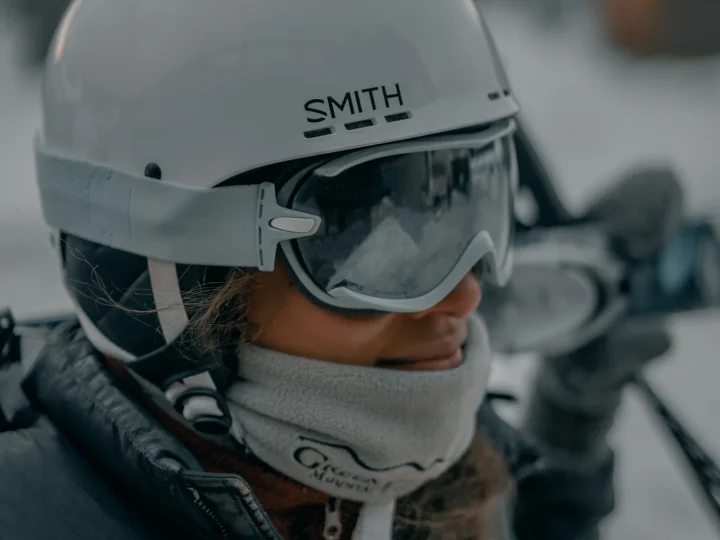
- Fit. evo’s guide advises measuring your head about an inch above your eyebrows and ears. A helmet should feel snug all around and move with your scalp when you shake your head.
- Standards. Look for a certification label. evo’s guide cites ASTM F2040 as the standard for non-motorized snow sports.
- After an impact. According to evo, helmets with EPS foam liners are rated for a single impact and should be replaced after a crash. Some brands run crash-replacement programs.
- Goggles. Make sure the helmet and goggles fit together with no gap and that the helmet does not push the goggles into your face.
See our best snowboard helmets guide for models, and the what to wear snowboarding article for the rest of your kit.
See Available Options (opens Amazon search for snowboard helmet adult with adjustable fit in a new tab)Protecting your wrists and learning to fall
Wrist injuries are among the most common in snowboarding. A systematic review of snowboard wrist guards (Kim and Lee, 2011) concluded that guards may help prevent them, although there is no agreement on which type or design is best. Technique matters as well. Burton’s beginner guidance is to get low when you feel off balance and sit or roll onto your butt or knees instead of bracing with your hands; when falling forward, roll from your knees onto your forearms.
See Available Options (opens Amazon search for snowboard wrist guards adult in a new tab)
Tree wells and deep snow
Leaving groomed runs for deep powder brings a specific hazard. The NSAA and the Deep Snow Safety site describe tree well and deep snow immersion as a rider falling, usually headfirst, into a tree well or deep, loose snow, becoming immobilized and trapped beneath the surface, and potentially suffocating.
When and where it happens
According to Deep Snow Safety, incidents mostly occur during or shortly after big storms, nearly all happen off groomed runs, and they cluster where deep powder meets trees. Staying on groomed runs greatly reduces the risk.
How to reduce the risk
- Ride with a partner. The NSAA’s advice is to always ride with a partner who stays within viewing distance of you.
- Know your resort’s emergency number. It is what you call for help.
- Be extra careful during and after storms, when the most incidents occur.
If you fall in
Deep Snow Safety’s guidance is to call out or blow a whistle to get your partner’s attention, and to try to keep your head above the snow by rolling or grabbing a branch or the trunk, keeping your feet below your head if you can. Once you are immersed, clear a breathing space around your face and protect your airway. Do not struggle, because that can pack the snow tighter. Stay calm to conserve air and expect your partner to come for you.
If you see someone go in
The first rule is not to leave your partner to get help. Call for more help by whistle, by shouting or by calling the resort’s emergency number, make sure the scene is safe, and begin the rescue immediately. Go straight for the airway and keep it clear. Do not pull the person out the way they fell in; find the head and tunnel in from the side, using several rescuers if possible.
Avalanche awareness for sidecountry and backcountry
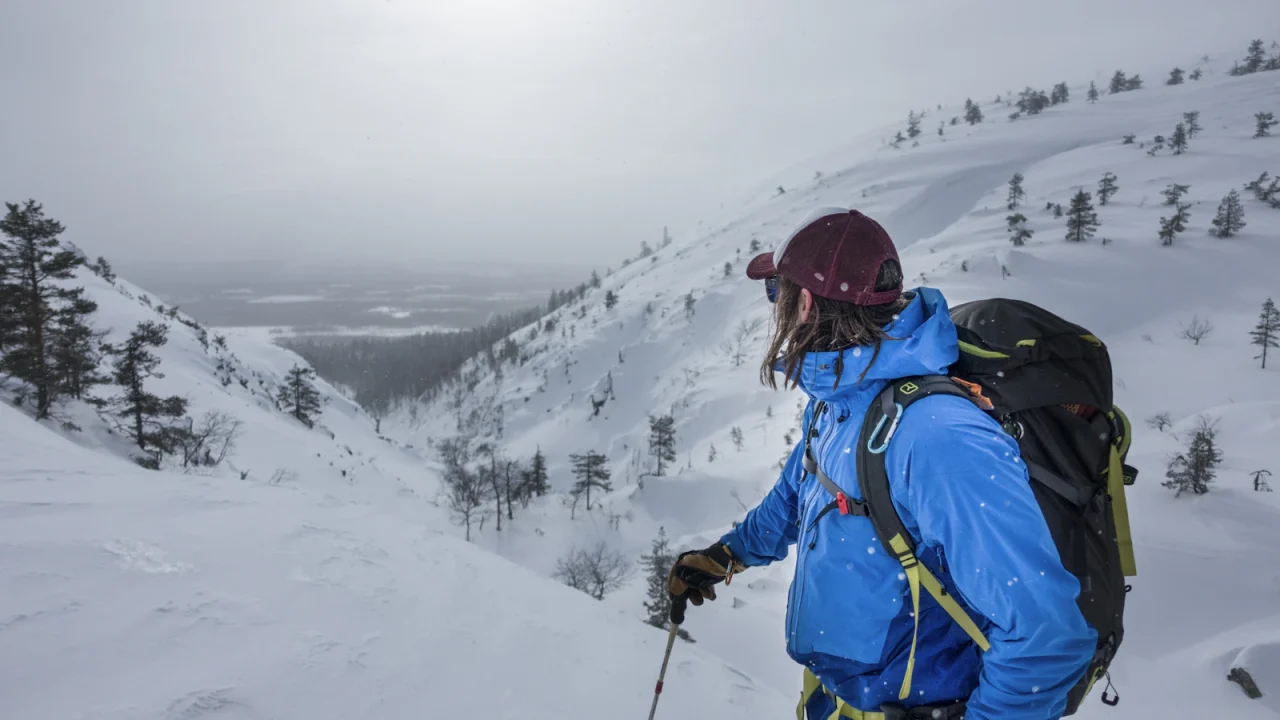
Resort terrain and backcountry terrain are different worlds. Avalanche Canada’s training page says its entry-level course, Avalanche Skills Training 1 (AST 1), is for anyone who ventures out of bounds, off trails or into the backcountry, so leaving the boundary should be treated as backcountry travel. In practice that means education first, then gear, forecasts and partners.
Get trained
Avalanche Canada’s AST 1 requires no prior experience, takes a minimum of two days with online or classroom and field components, and covers how avalanches form and release, identifying avalanche terrain, basic trip planning, using the forecast, travel techniques and an introduction to companion rescue. It recommends everyone in a group take it. In the United States, Avalanche.org lists course providers whose educators follow American Avalanche Association curriculum guidelines, and offers an online tutorial.
Carry the essentials, and know how to use them
Avalanche Canada says everyone in a backcountry group needs an avalanche transceiver (beacon), a shovel and a probe, and needs to have practiced with them. It recommends a three-antenna digital transceiver and a sturdy shovel, not a plastic or flimsy one. Airbag packs can reduce burial risk but are “not a silver bullet”: you still need the three essentials. Satellite messengers or personal locator beacons are useful backups but do not replace companion rescue.
Check the forecast and the conditions
Use forecasts from professional avalanche centers: Avalanche.org links to the centers across the United States, and Avalanche Canada publishes forecasts for Canada. The North American Public Avalanche Danger Scale has five levels: Low, Moderate, Considerable, High and Extreme. Avalanche Canada advises extra caution during and after storms, especially with 30 cm (about a foot) or more of new snow or strong winds, after major weather changes, and when weak layers are known or suspected. It also lists cracking snow, hollow “whumpf” sounds and weak snow beneath a stronger layer as signs to back off, and advises being willing to take a less risky option or turn back.
Travel smart with others
Avalanche Canada’s risk-reduction guidance includes exposing only one person at a time in avalanche terrain while others watch from a safe spot, regrouping only in safe places, and avoiding terrain traps such as gullies and slopes above cliffs. Burton’s powder guidance states it plainly: never ride avalanche terrain alone.
Altitude, cold and sun
Altitude
The CDC’s Yellow Book says acute mountain sickness (AMS) usually brings a headache plus loss of appetite, dizziness, fatigue, nausea or occasionally vomiting. Symptoms usually begin 2–12 hours after arrival, often during the first night, and generally clear within 12–48 hours if you do not go higher. Unacclimatized travelers can be at risk at sleeping altitudes of about 8,000 ft (2,450 m) or higher, and sometimes lower, and the CDC says fitness and training do not change your risk. Its advice includes ascending gradually, avoiding alcohol for the first 48 hours, keeping activity mild at first, never going higher to sleep while you have symptoms, and descending if symptoms worsen. Ask a doctor before travel about prevention options.
Cold
The CDC lists the warning signs of hypothermia in adults as shivering, exhaustion, confusion, fumbling hands, memory loss, slurred speech and drowsiness. Early frostbite may show as redness or pain, then a white or grayish-yellow patch, skin that feels firm or waxy, and numbness. Because frozen tissue is numb, people often do not notice it. The CDC also warns that getting wet from rain, sweat or cold water can cause hypothermia even above 40°F (about 4°C). Layering and covering exposed skin help; our clothing guide explains how.
Sun
evo notes that UV intensity rises with altitude and that almost all new goggles block 100% of UV.
Hydration, fuel and fatigue
Burton’s beginner guidance is to drink water through the day even if you do not feel thirsty, eat a hearty breakfast, plan lunch so you can warm up indoors, stretch before riding, and expect to get tired and listen to your body. Under the NSAA code, do not use lifts or terrain if you are impaired by alcohol or drugs.
A quick pre-ride checklist
- Helmet fitted, goggles clear, wrist protection if you want it.
- Know the resort’s trail map, closures and emergency number.
- Ride within your ability and speed limit.
- Stay hydrated, and dress to stay dry.
- In deep snow or trees, stay within sight of a partner.
- Beyond the boundary, go only with training, gear, current forecasts and partners.
Heading for deep snow? Our guide to how to snowboard in powder covers technique and tree safety together.
Frequently asked questions
Who has the right of way on the slopes?
People ahead of or downhill from you have the right of way under the NSAA code. The FIS rules say anyone coming from behind must choose a route that does not endanger those ahead.
What should I do after a collision?
Both the NSAA code and the FIS rules call for exchanging contact details, and the FIS rules say anyone at an accident is duty-bound to assist. Contact ski patrol or the resort’s emergency number for injuries.
Can I ride just outside the resort boundary?
Avalanche Canada treats going out of bounds as backcountry travel, which calls for avalanche training, rescue gear and partners. Whatever you plan, the NSAA code says to stay off closed trails and out of closed areas, so check the resort’s boundary and closure rules first.
Does a helmet make me safe?
No. The NSAA asks riders to wear one but to ride as though they were not wearing one, and notes that behavior has as much or more to do with safety than equipment.
Sources and further reading
- Your Responsibility Code (2022) — National Ski Areas Association
- Why a new Code? — National Ski Areas Association
- FIS Code of Conduct for Skiers and Snowboarders — International Ski Federation
- 10 FIS Rules for Conduct (2002 wording, with general comments) — FIS rules as published by Kitzsteinhorn
- Helmet Safety — National Ski Areas Association
- How to Choose a Ski and Snowboard Helmet and Size Chart — evo
- Snowboard wrist guards: use, efficacy, and design. A systematic review — Kim and Lee, Bulletin of the NYU Hospital for Joint Diseases (2011)
- Learn to Snowboard: Quick and Easy Tips for Beginners — Burton
- Tree Well and Deep Snow Safety — National Ski Areas Association
- What to Do — Deep Snow Safety
- When and Where — Deep Snow Safety
- Tree Well Safety — Colorado Ski Country USA
- Training — Avalanche Canada
- Essential Gear — Avalanche Canada
- Avalanche Risk Reduction Procedures — Avalanche Canada
- Avalanche.org — American Avalanche Association and US avalanche centers
- Avalanche Encyclopedia — Avalanche.org
- High-Altitude Travel and Altitude Illness — CDC Yellow Book
- Preventing Hypothermia — US Centers for Disease Control and Prevention
- How to Snowboard in Powder — Burton
- How to Choose Ski and Snowboard Goggles — evo