What to Wear Snowboarding: Layers, Waterproofing, Gloves, Helmet and Goggles
A clear guide to the layering system, waterproof and breathability ratings, gloves versus mittens, and choosing a helmet and goggles.
Getting cold and wet is the fastest way to shorten a good day on snow. The good news is that you do not need a closet full of technical gear to stay comfortable. What matters is how the pieces work together: a layering system that manages sweat, a waterproof outer shell, warm hands and head, and a helmet and goggles that fit.
This guide explains each layer, what the numbers on waterproof labels actually mean, and how to choose gloves or mittens, a helmet and goggles. If you are brand new to the sport, read it alongside our beginner’s guide to snowboarding.
The layering system
Dressing in layers lets you add or remove clothing as the weather and your effort change. Burton recommends checking the forecast, dressing in layers, and dressing for movement without overdressing. evo’s guide breaks the system into three jobs.
Base layer: move sweat away from your skin
The base layer sits against your skin and pulls sweat away so you stay dry. evo advises wicking synthetic or wool pieces, with long underwear and a long-sleeve top as the core items, and warns against bulky sweatshirts and sweatpants.
Burton’s base layer guide compares the two main materials. Merino wool is soft, insulates when damp and slows odor, but costs more and is less durable. Synthetics (polyester or polypropylene) wick sweat quickly, are durable and are usually cheaper, although they can hold odor unless treated. On weight, Burton calls midweight a good starting point for most riders and resort use, lightweight best for high-output activities, and heavyweight best if you run cold.
See Available Options (opens Amazon search for merino wool thermal base layer top and bottom in a new tab)Mid layer: trap warmth
The mid layer provides insulation and is the easiest layer to adjust through the day. It does not need to be waterproof. Fleece, sweaters and puffy jackets all work, though fleece and sweaters can be bulky. If you choose insulation with down, note evo’s point that down has the best warmth for its weight but loses effectiveness when wet, while synthetic insulation is less warm for its weight but copes better in damp conditions.
Outer layer: block snow, wind and water
The shell jacket and pants keep snow, rain and wind out while letting water vapor escape. Both are normally labeled with waterproofing and breathability ratings, covered in the next section.
Why you should avoid cotton
Cotton absorbs sweat and holds it against your skin. Burton explains that once damp, cotton loses its insulating air pockets and draws warmth away from your body, and its beginner guide says to leave jeans at home too. evo advises avoiding cotton for base layers, mid layers and underwear, and says synthetic and wool fabrics keep working when wet. The US Centers for Disease Control and Prevention (CDC) notes that getting chilled from rain, sweat or cold water can cause hypothermia even at temperatures above 40°F (about 4°C). Wet clothing should come off as soon as you reach shelter.
Waterproof and breathability ratings, explained
Outerwear carries two kinds of numbers, and they are easy to mix up.
Waterproof rating (millimeters)
The waterproof figure is a hydrostatic head rating. In the test, a tube is placed over a piece of fabric and filled with water until the fabric starts to leak; the height of the water column, in millimeters, becomes the rating. A fabric rated at 10,000 mm, for example, could hold back a column of water 10 meters high. Because it measures the fabric alone, it is only a rough guide to how a finished jacket will behave, since seams, zippers and coatings also affect whether water gets through.
evo groups ratings into bands like these. Other retailers draw the lines slightly differently, so treat them as approximate.
| Waterproof rating | What it generally suits (per evo) |
|---|---|
| 0–5,000 mm | Very light rain or dry snow, with little pressure on the fabric |
| 6,000–10,000 mm | Light rain, average snow, light pressure |
| 11,000–15,000 mm | Moderate rain, average snow, light pressure |
| 16,000–20,000 mm | Moderate rain, wet snow, some pressure |
| 20,000 mm and above | Heavy rain, wet snow, high pressure |
evo suggests at least 5,000 mm for jackets and pants on cold, clear days with regular lodge breaks, 5,000–10,000 mm for long days in any weather, 10,000–20,000 mm for keen riders in wetter climates, and 20,000 mm or more for backcountry travel. It also notes that backpack straps add pressure that can push moisture through lower-rated fabric.
Several caveats apply:
- Testing is not fully standardized. Different labs can report different results, and evo advises reading manufacturers’ numbers skeptically.
- Seams matter. Ridestore notes that seams are the weakest point, so look for taped or sealed seams.
- The outer coating wears off. A durable water repellent (DWR) finish helps water bead up on the surface, but it does not raise the waterproof rating and fades over time. It can be refreshed with wash-in or spray-on treatments.
- No jacket is completely waterproof. Given enough water, time or pressure, any active outerwear can leak.
Breathability rating (grams)
Breathability is usually expressed in grams of water vapor that pass through a square meter of fabric in 24 hours. Many labels show both numbers separated by a slash, with breathability second. Some brands, Gore-Tex among them, use a RET scale instead, where a lower number is better. Guidance on how much you need varies: evo suggests roughly 5,000–8,000 g is enough for lift-served snowboarding, while Ridestore describes 10,000–20,000 g as the industry standard for most gear. Test methods are not standardized, so use the figure to compare pieces from the same brand rather than treating it as exact.
Socks
evo recommends thin, moisture-wicking wool or synthetic socks, ideally made for skiing or snowboarding. Thin socks help circulation, and a snug fit keeps them from bunching inside your boots. evo calls poor sock choice one of the most common beginner mistakes.
Check Price on Amazon (opens Amazon search for snowboard socks merino wool thin in a new tab)Gloves or mittens?
Mittens are generally the warmest option because your fingers share one compartment, while gloves give you more dexterity for buckles, zippers and goggle straps. Hybrids such as three-finger “lobster” mitts sit between the two, according to evo’s glove guide. evo’s clothing guide adds that liner gloves can add warmth and let you take off a mitten for fiddly jobs.
Whichever you choose, look for waterproof, insulated construction. evo’s glove guide notes that wet hands get cold quickly, and the cause is often sweat trapped inside the glove, so breathability matters as well as waterproofing. Down insulation is excellent when cold and dry but loses its advantage when wet; synthetic insulation keeps insulating when damp.
See Available Options (opens Amazon search for waterproof insulated snowboard mittens with liners in a new tab)Helmet and goggles
Helmet
evo recommends wearing a helmet every time you ski or snowboard. The National Ski Areas Association (NSAA) reports that overall helmet use among US skiers and riders rose from 25% in the 2002–03 season to 90% in 2023–24, and also advises riding as if you were not wearing one.
- Fit first. Measure your head with a soft tape about an inch above your eyebrows and ears, and compare it to the brand’s chart, since sizing varies. A helmet should feel snug all around, and your scalp should move with it when you shake your head.
- Look for a certification label. evo’s guide cites ASTM F2040 as the standard for non-motorized snow sports.
- Replace after a hard impact. According to evo, helmets with EPS foam liners are rated for a single impact and should be replaced after one crash.
For specific models, see our best snowboard helmets guide.
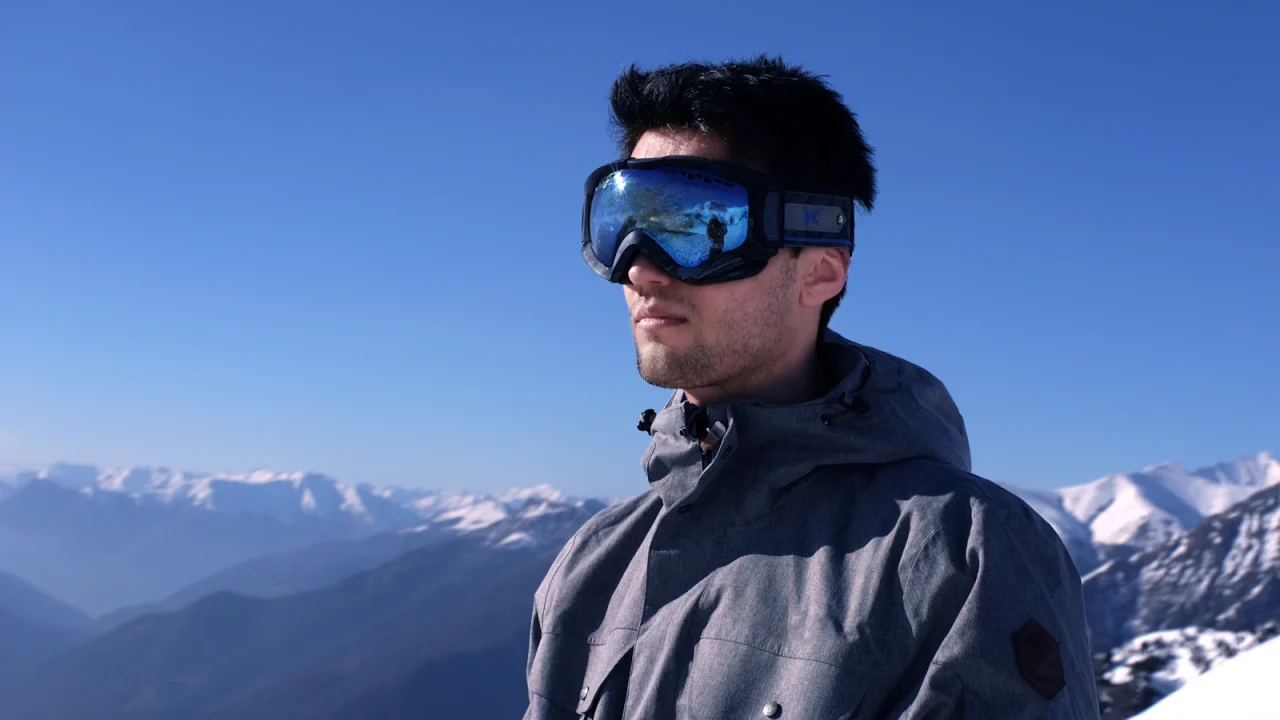
Goggles
Goggles protect your face and eyes from sun and wind better than sunglasses. The main choice is lens tint, measured as visible light transmission (VLT), the percentage of light the lens lets through. evo lists 60–90% VLT (often yellow, rose or blue) for low light and storms, and 5–20% (often black, grey or gold, frequently mirrored) for bright, sunny days. Photochromic lenses darken and lighten with the light but take several minutes to adjust. evo also notes that almost all new goggles block 100% of UV and that UV intensity rises with altitude.
Try goggles on with your helmet, because there should be no gap between them and the helmet should not push the goggles into your face. Our best snowboard goggles guide compares current options.
Head, neck and face
evo suggests a thin liner beanie under your helmet, without big seams or pom-poms, and a balaclava or buff to cover your nose and mouth and close the gap between jacket and helmet. The CDC lists the nose, ears, cheeks, chin, fingers and toes as the areas most prone to frostbite, which is a good reason to cover them on very cold days.
You do not need to buy everything at once
Burton’s beginner advice is that any gear that keeps you warm, dry and safe is enough at first, and that borrowing outerwear and protective gear from family is fine. Rental shops often stock outerwear too, so ask before you buy. When you are ready to pack, our snowboard trip packing list and the checklist tool below cover the rest.
Frequently asked questions
Can I wear jeans snowboarding?
Burton’s beginner guide says to avoid cotton and jeans, which hold moisture and make you cold. Waterproof snow pants over a wicking base layer are the usual alternative.
How many layers do I need?
The system has three parts: base, mid and outer. How thick each should be depends on the forecast and how hard you will be working. Dress so you can add or remove a layer rather than starting with everything on.
What waterproof rating should I look for?
For occasional lift-served days in cold, dry conditions, evo suggests at least 5,000 mm. If you ride long days in all weather or in wetter climates, higher ratings in the 10,000–20,000 mm range are suggested. Check the brand’s own explanation, because ratings are not tested to one standard.
Are mittens better than gloves?
Mittens are usually warmer, and gloves offer better dexterity. Hybrid and liner options split the difference.
Sources and further reading
- What to Wear and How to Dress for Skiing and Snowboarding — evo
- How Waterproof and Breathability Ratings Work — evo
- Waterproof Ratings and Breathability Explained — Ridestore
- How to Choose a Ski and Snowboard Helmet and Size Chart — evo
- How to Choose Ski and Snowboard Goggles — evo
- How to Buy Ski and Snowboard Gloves and Mittens — evo
- Getting Started: Snowboarding for Beginners — Burton
- Ski and Snowboard Base Layer Buyer’s Guide — Burton
- Preventing Hypothermia — US Centers for Disease Control and Prevention
- Helmet Safety — National Ski Areas Association
- A Guide to Hydrostatic Head Ratings — SMI Group
- Hydrostatic head — Wikipedia