How to Pack a Snowboard Bag for Flying: Step-by-Step
A step-by-step way to pack a snowboard bag for air travel: bindings, edges, padding, boots, helmet and goggles, and weight, based on manufacturer guidance and airline rules.
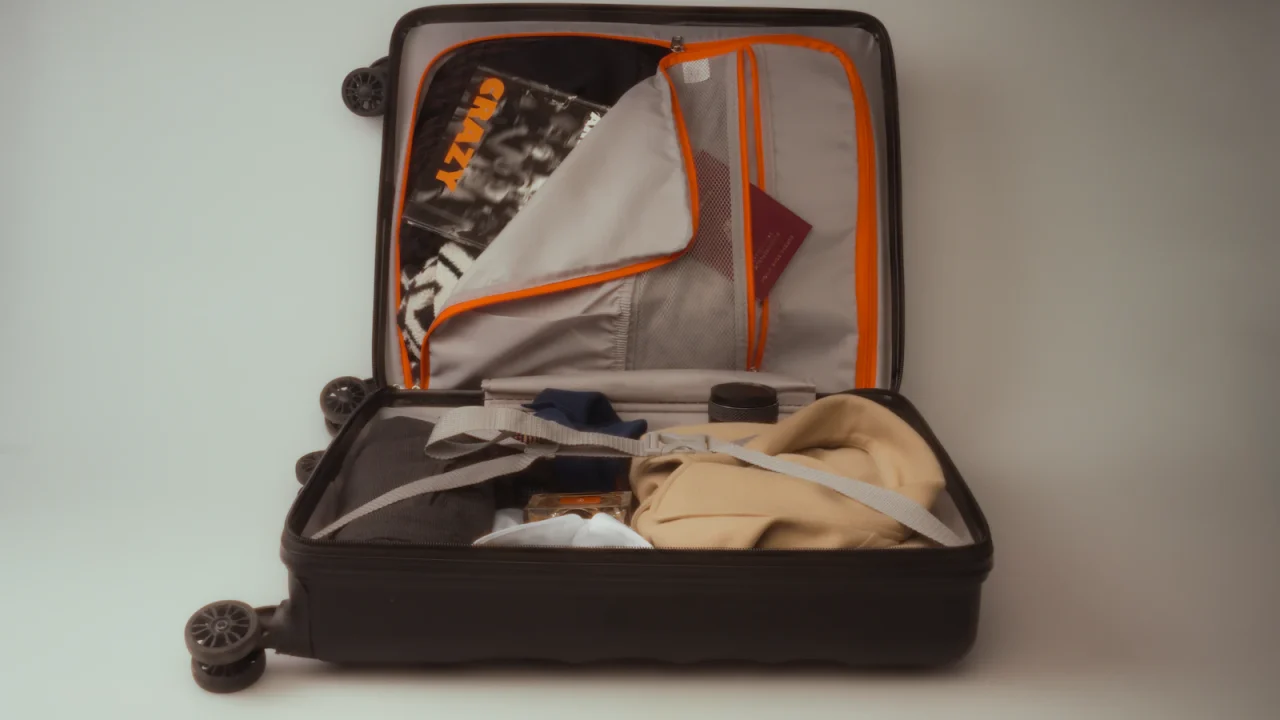
A well-packed board bag does three jobs at once: it protects the board and bindings, keeps the bag under the airline’s weight line, and makes check-in a calmer experience. Packing it well is mostly a matter of order and padding rather than special equipment.
This step-by-step guide draws on packing advice from snowboard and luggage manufacturers, plus the rules airlines publish about what may go in a sports-equipment bag. For the airline side of the story, see our guide to how to fly with a snowboard.
What you need
- A padded board bag sized for your board, with room for boots if they will travel inside. Our snowboard travel bag guide compares options.
- Padding: bubble wrap, a towel, or soft layers, depending on what your airline allows.
- Cardboard and tape to cover sharp edges (Burton’s suggestion).
- A small zip bag for screws and other hardware if you remove the bindings.
- A luggage scale to check weight before you leave home.
- Luggage tags, and optionally a TSA-approved lock and a tracker.
Step by step
1. Inspect the bag and the board
Burton suggests emptying the bag’s pockets, cleaning off dirt and checking zippers and seams before each trip, and lubricating zippers with a silicone-based lubricant. A bag that fails mid-journey is a bigger problem than a scuffed board. Make sure the board itself is dry and clean before it goes in.
View on Amazon (opens Amazon search for luggage scale digital in a new tab)2. Decide what to do with the bindings
You have two common options, and the manufacturers describe both:
- Leave them on. Travelpro suggests folding the highbacks down, tightening the straps over something soft and wrapping the binding area in bubble wrap or a towel. Db Journey suggests tucking soft items under the highback and footbed on shorter trips.
- Take them off. Db Journey notes this frees up room and reduces pressure on the board if you are packing multiple boards or bulky gear. Keep the screws and hardware in a sealed bag and fasten that bag to something large so it cannot get lost. A quick photo of your stance angles and positions helps you set them up again.
3. Cover the edges
Burton notes that freshly sharpened edges can cut fabric, and suggests taping cardboard over them to protect the bag and anything packed next to the board. Some riders ask whether they should dull or “detune” their edges for travel; the manufacturer guidance reviewed focuses on covering edges rather than changing the board’s tune. If you have questions about your board’s setup, ask a shop.
4. Place the board in the center
Travelpro advises placing the board in the center of the bag, where it has the most protection from knocks. Lay it flat and keep padding between the edges and the zipper line.
5. Pack the boots
There are two approaches, and your airline’s counting rules decide which makes sense:
- A separate boot bag. Delta accepts one boot bag per person alongside the snowboard bag, and Air Canada does not count a boot bag that travels with a board and holds only equipment. Travelpro suggests a boot bag for boots, jacket, snow pants and helmet.
- Inside the board bag, stuffed with socks or small soft items. Db Journey suggests interlocking the boots at one end of the bag.
If you skip a boot bag, Burton suggests carrying the boots in your carry-on and confirming that your airline allows it.
6. Protect the helmet and goggles
Db Journey and Travelpro both suggest putting goggles inside the helmet, cushioned by gloves or a beanie. Place the helmet at the opposite end of the bag from the boots. Keep fragile eyewear in a case.
7. Fill the gaps
Empty space lets contents shift, so fill dead zones around the bindings and boots with soft items. Db Journey suggests rolled base layers and socks, and Travelpro suggests wrapping snow pants or base layers around the board if the bag is not well padded. This is where the airline caution above applies: if your carrier doesn’t allow clothing in the board bag, use bubble wrap or foam instead.
8. Weigh everything
Weight limits are often around 50 lb (23 kg). Delta, for instance, applies its 50 lb excess-weight check to the board bag and boot bag combined, and JetBlue’s contract charges excess weight from 51 lb. Weigh the packed bag at home. If you do not have a luggage scale, Burton suggests standing on a scale holding the bag and subtracting your own weight.
If you are over, move heavy items such as boots into your carry-on and cut extras. Burton suggests packing only essentials, and Travelpro suggests putting the heaviest items near the wheels so a wheeled bag rolls easily.
9. Close, label and photograph
- Attach durable tags with your contact details inside and outside the bag.
- Consider a tracking device and note the serial numbers of valuable items (Travelpro and Burton).
- Photograph the packed bag and board before check-in in case you need to file a damage claim (Burton).
- If you use a lock, Burton recommends a TSA-approved one.
What goes where
| Bag | Suggested contents | Why |
|---|---|---|
| Board bag | Board, bindings (on or off), padding, goggles inside the helmet | Keeps fragile items cushioned and the bag within one checked item |
| Boot bag | Boots, and per Travelpro, items such as jacket, snow pants and helmet | Some airlines count it together with the board bag; check yours |
| Carry-on | Passport, electronics, chargers, medications, plus a backup of boots, helmet and goggles if you wish | Essentials stay with you if a checked bag is delayed |
Items to handle separately
- Spare lithium batteries (power banks, batteries for heated gear or cameras) belong in carry-on baggage, according to the FAA’s PackSafe guidance. Check the watt-hour limits and your airline’s rules.
- Avalanche gear: Burton advises removing batteries from avalanche transceivers, radios and airbag systems, emptying any compressed air or CO2 cylinders (or buying one at your destination), and carrying small valuable items such as transceivers in your carry-on. Airline and airport rules for these items are specific, so confirm them in advance.
- Ski wax: WestJet says wax must be non-flammable and that butane or torches used to remove wax are not accepted. Other airlines may have their own rules.
Once the bag is sorted, run through the snowboard trip packing list or use the checklist tool below. Protecting goggles and helmets is easier when you know what you are buying: see our guides to snowboard helmets and snowboard goggles.
Frequently asked questions
Should I take the bindings off?
Both approaches appear in manufacturer guidance. Leaving them on is quicker for a short trip if you fold the highbacks down and pad the area; removing them frees space and reduces pressure on the board. Whichever you choose, keep screws and hardware together in a sealed bag.
Can I put clothes in the board bag?
Many guides use clothing as padding, but airline rules differ. Air Canada says equipment bags can’t contain clothing or personal items, and Travelpro notes that airlines may remove clothing during inspection. Check your carrier first.
Can the boots go in the board bag?
Yes, many riders pack them there, stuffed with socks. Some airlines also let you check a separate boot bag with the board, so confirm how yours counts it.
How do I stay under 50 lb?
Weigh at home with a luggage scale or the bathroom scale method, move heavy items to your carry-on and pack only essentials. Confirm your airline’s actual weight line.
Do I need a hard case?
Padded bags are widely used, but some airlines’ wording refers to rigid or hard-sided containers. See the airline summary in our guide on flying with a snowboard and check your carrier’s wording.
Sources and further reading
- Travel hacks for flying with your skis or snowboard — Travelpro
- How to fly with a snowboard — Burton
- How to pack a snowboard bag for air travel — Db Journey
- Sporting equipment (ski and snowboard) — Delta Air Lines
- Special items: skis and snowboards — Air Canada
- Golf clubs, bicycles, sporting equipment — WestJet
- Contract of Carriage (revision dated April 17, 2026) — JetBlue Airways
- PackSafe: lithium batteries — Federal Aviation Administration